Sponsored article
How Does a Rubber Entrance Mat Stop Dirt Before It Reaches the Aluminum Mat?
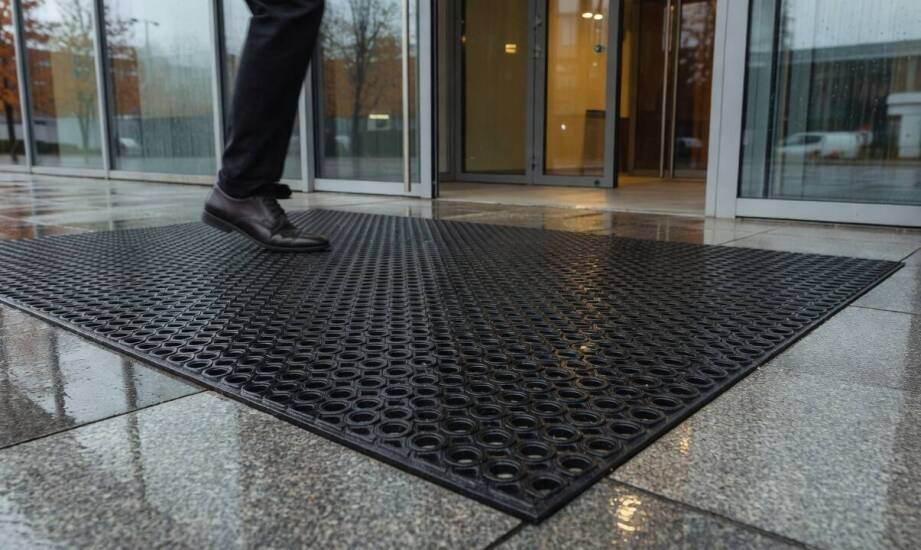
A rubber entrance mat serves as the first line of defense against dirt tracked into commercial and public buildings on footwear. Even the most impressive lobby flooring can quickly lose its appeal when exposed to sand, water, and slush. Hard quartz particles act like sandpaper, gradually damaging floor finishes and increasing maintenance costs. At the same time, water carried onto smooth surfaces raises the risk of slips and falls for visitors and employees.
Read more: Why are aluminium mats chosen for the entrance areas of buildings more and more often?
A properly designed entrance matting system helps intercept these contaminants before they cross the building threshold. By introducing a robust first-stage barrier, the workload placed on subsequent cleaning zones is significantly reduced, helping facility managers lower daily cleaning expenses and extend the lifespan of interior flooring.
Read more: What are the best materials for waterproof entrance doormats?
Dirt-Scraping Mechanisms Before the Aluminum Zone
Industry studies indicate that a large proportion of dirt entering commercial buildings is carried in on shoe soles. Textile mats placed indoors can rarely cope with thick mud, compacted snow, or coarse debris on their own. This is why the external cleaning zone must be designed to remove contaminants mechanically.
Read more: Choosing PVC bar mats for high-traffic areas
The effectiveness of a rubber mat comes from its textured surface, raised studs, and specially engineered tread patterns. These features work like a durable brush, reaching into the sole profile to dislodge dirt and debris.
Honeycomb-shaped openings allow contaminants to fall beneath the walking surface instead of remaining on top. Because the rubber remains resilient under heavy foot traffic, the structure stays open and effective throughout the day. Mud is not spread across the mat surface but is instead directed into the collection area beneath.
How Material Selection Impacts Outdoor Durability
Outdoor entrance areas require materials capable of withstanding changing weather conditions. Choosing the right compound has a direct impact on the long-term performance of the cleaning system.
EPDM rubber is widely valued for its resistance to UV radiation, ozone exposure, and temperature fluctuations. Depending on the formulation and manufacturing process, it can maintain flexibility across a broad temperature range. SBR rubber also offers strong mechanical performance and cost efficiency, although prolonged exposure to sunlight may affect its performance more quickly than UV-resistant alternatives.
Rubber entrance mats are often designed with beveled edges to improve accessibility.
This construction helps wheeled traffic such as shopping carts, trolleys, and service equipment move smoothly across the entrance area while reducing potential trip hazards for pedestrians.
The Synergy Between Rubber and Aluminum in a Three-Zone Entrance System
Effective floor protection is usually based on the principle of a three-zone entrance system. The external rubber section acts as the primary barrier, removing much of the coarse dirt and moisture before visitors enter the building.
Behind this first stage, aluminum entrance mats equipped with brush inserts, scraper strips, or moisture-absorbing infills provide more detailed cleaning and drying of footwear. A multi-zone system can significantly improve dirt retention compared with a single entrance mat solution.
A seamless transition between cleaning zones requires precise manufacturing and installation. Gaps or dimensional inaccuracies may create areas where dirt and moisture accumulate.
Unimat manufactures modular modulus systems and aluminum entrance mat solutions designed for integration within professional entrance areas.
Accurate fitting within the installation frame helps prevent mat movement and supports the stable performance of the entire cleaning system. Integrated drainage channels can further reduce water accumulation in high-traffic entrances.
Applications in Demanding Commercial Environments
Buildings with heavy pedestrian traffic place particular demands on entrance matting systems.
In large supermarkets, rubber mats help prevent mud and debris carried by shopping carts from reaching the sales floor. Premium hotels use them to protect natural stone and marble surfaces from road salt and abrasive contaminants during winter. Healthcare facilities, schools, and museums also rely on effective dirt-scraping systems to maintain high standards of cleanliness and safety.
Problems can arise quickly when a mat is incorrectly specified. A structure that is too thin may deform under repeated loads or maintenance equipment. Likewise, failing to remove accumulated debris from collection areas can reduce drainage performance and overall cleaning effectiveness.
When dirt and mud begin bypassing the first cleaning zone, the burden is transferred to the more delicate internal matting systems, accelerating wear and reducing efficiency.
The Economic Value of a Complete Entrance Matting System
The full potential of a rubber entrance mat becomes apparent when it functions as part of a complete entrance flooring solution.
The rubber section takes on the heaviest cleaning tasks, allowing aluminum and textile zones to focus primarily on moisture removal and final shoe cleaning. Regular maintenance and ensuring drainage areas remain clear can significantly extend the lifespan of the entire installation.
As a result, building owners often experience lower cleaning costs, reduced floor maintenance requirements, and less frequent refurbishment of expensive floor coverings. Reduced polishing, fewer repairs, and prolonged floor life provide strong financial justification for investing in a professionally designed entrance system.
A properly planned entrance solution helps continuously minimize the amount of dirt and moisture brought into the building, improving both cleanliness and safety.
Rubber mats provide the first line of defense before contaminants reach aluminum entrance mat systems.
Tread patterns, perforations, and rubber flexibility help scrape away mud while allowing moisture to drain effectively.
They are most effective as an external cleaning barrier in entrances with heavy pedestrian and wheeled traffic.
Material selection influences resistance to UV exposure, temperature fluctuations, deformation, and intensive use.
In a three-zone entrance system, rubber mats work together with aluminum or modular matting to improve overall cleaning performance.
Incorrect dimensions, thickness, or installation can contribute to gaps, movement, reduced drainage, and increased wear.
FAQ
Why should a rubber mat serve as the first entrance zone?
A rubber mat removes the largest and heaviest contaminants before they reach more delicate internal cleaning zones. This reduces the load on aluminum and textile mats while limiting the amount of dirt and moisture carried further into the building. It also helps improve slip resistance near the entrance.
Which rubber material performs best outdoors?
EPDM rubber is often considered one of the most suitable options for outdoor applications due to its resistance to UV radiation, ozone, and varying weather conditions. SBR rubber can be a cost-effective alternative but may generally age faster under prolonged sun exposure.
Which installation mistakes most reduce mat performance?
The most common issues include incorrect sizing, insufficient thickness, and poor frame integration. These problems can create gaps, allow the mat to move under traffic, and interfere with water drainage and dirt collection. As a result, cleaning efficiency decreases while the risk of wear and trip hazards increases.
You might be interested
How Do Cavity Count and Runner Design Affect the Cost-Effectiveness of an Injection Mould?

OEM, ODM, and Contract Manufacturing in Dietary Supplements: How They Affect Formula Control, Costs and Time to Market

How to Choose a Company for Kitchen Renovation?