Sponsored article
OEM, ODM, and Contract Manufacturing in Dietary Supplements: How They Affect Formula Control, Costs and Time to Market
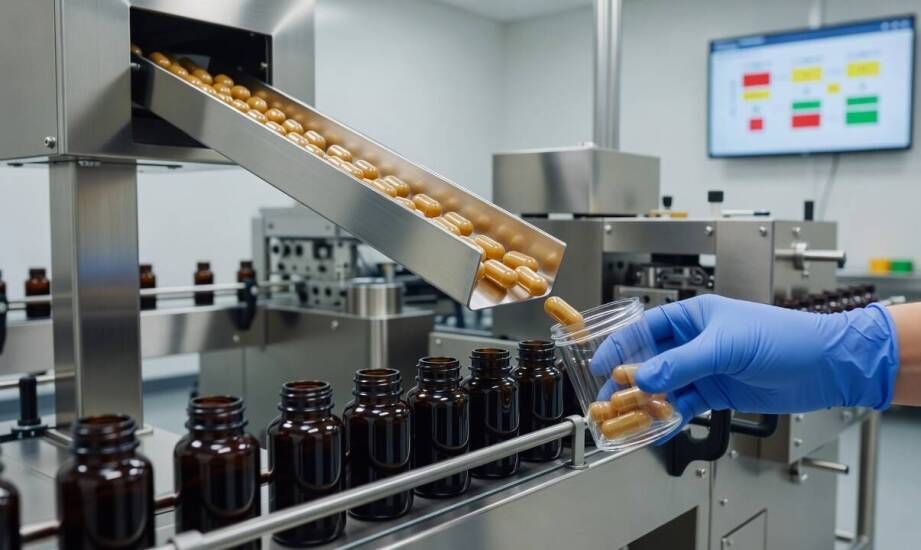
Cooperation models with a dietary supplement manufacturer differ in terms of formula ownership, development responsibilities, and the speed of product launch. Choosing the right operational model determines who provides the formulation concept, who funds the necessary development work and technological trials, and who retains ownership of the formula once the contract ends.
Read more: What can wholesale vitamin K2 MK7 powder be used for?
How Do OEM, ODM, and Contract Manufacturing Differ?
The key difference between these models lies in the division of research and development responsibilities.
In the OEM model, the brand provides a finished formula or detailed technical specifications. In this arrangement, the manufacturer is responsible solely for executing the production process, while all intellectual property rights and formulation know-how remain with the client. This typically includes active ingredient specifications, carrier selection, and dosage-form requirements.
In the ODM model, a larger share of development work is handled by the manufacturer. A professional supplement contract manufacturer may provide formulation expertise and development support based on a general product brief supplied by the brand. Contract manufacturing projects often take a hybrid approach, where the client defines the key active ingredients while the manufacturer's technologists select excipients, stabilizers, and processing solutions.
The level of control over the final product depends directly on the chosen model. For example, when developing coated tablets or hard capsules, a brand may either define specific formulation parameters or rely on established manufacturing platforms proposed by the producer.
EuroPharma Alliance supports customers across different cooperation models, adapting the scope of services to the technological capabilities and business objectives of each client.
Formula Ownership and the Risk of Losing Competitive Advantage
Ownership of technical documentation and formulation rights determines the flexibility available for future product modifications. It also influences the risk of competitors gaining access to an identical or highly similar formula.
When intellectual property rights remain with the manufacturer, the brand may receive only a license to market the product under its own label. Expanding into new markets or changing production partners can then require renegotiating contractual terms or redeveloping the formulation from the ground up.
Assigning ownership to the brand provides significantly greater operational freedom. Agreements that transfer intellectual property rights to the customer allow unrestricted use and future adaptation of the formula.
This approach also helps preserve product differentiation because the manufacturer cannot offer the same formulation and dosage form to other customers. Unclear contractual provisions regarding ownership remain one of the most common sources of disputes after a partnership ends.
Time to Market, MOQ, and Private Label Models
The time required to launch a first production batch depends on both the selected cooperation model and the complexity of the formulation.
Private label solutions based on existing catalog formulations offer one of the fastest routes to market. Once a product is selected and packaging artwork is supplied, manufacturing and packaging can often begin within a matter of weeks. Since the formulation has already been developed, companies can avoid much of the time associated with initial formulation design and validation.
Developing an exclusive custom formula generally requires a longer project timeline. Activities may include raw material selection, pilot production, technological validation, and market-specific regulatory processes. These additional development stages can extend project timelines significantly before commercial-scale production begins.
Minimum order quantities (MOQ) are also influenced by formulation complexity, raw material availability, and production requirements. Standard catalog-based products can often be manufactured in lower volumes, while custom tablet, softgel, or sachet projects typically require larger production runs.
Unique formulations may necessitate sourcing specialized ingredients, preparing dedicated packaging formats, and implementing additional quality-control procedures.
Legal Protection and Product Launch Scenarios
A well-structured agreement protects the integrity of a project throughout the product lifecycle. Legal documentation should include clear provisions covering the transfer of technical documentation if manufacturing is moved to another facility.
Confidentiality obligations, territorial exclusivity arrangements, and clearly defined responsibilities for quality audits and compliance systems are also important considerations. These aspects become particularly relevant when multiple parties participate in product development and manufacturing.
New products are typically launched through one of three main approaches.
The first involves entering the market with a proprietary formula already developed by the brand. This route provides maximum control and may support stronger differentiation in the long term.
The second approach consists of outsourcing research and development activities. This lowers the initial barrier to entry but often creates a greater dependence on the manufacturer's technology and expertise.
The third option relies on private label products, providing rapid market access through existing formulations but offering less exclusivity.
Ultimately, the chosen cooperation model has a lasting impact on supply-chain stability and business scalability. Maintaining ownership of technical documentation makes future expansion easier but generally requires greater investment during the development phase. Hybrid models allow companies to transfer part of the technological risk to the manufacturing partner while focusing internal resources on marketing and distribution.
Key Takeaways
OEM, ODM and contract manufacturing differ in formula ownership, development responsibilities, and allocation of know-how.
In the OEM model, the brand provides the formulation while the manufacturer focuses on production according to supplied specifications.
ODM shifts more development and technological work to the manufacturer, which can accelerate market entry but may reduce exclusivity.
Ownership of formulas and documentation determines the ability to modify products and influences the risk of similar products appearing elsewhere.
Private label solutions typically shorten launch timelines, while custom projects require additional development, validation, and regulatory preparation.
MOQ depends on formulation complexity, raw material availability, and manufacturing requirements.
Well-constructed agreements should protect confidentiality, intellectual property, and documentation-transfer procedures.
FAQ
When is it worth choosing OEM instead of ODM?
OEM is typically the preferred option when a brand already possesses its own formulation and wants to maintain full control over the final product. This model helps protect proprietary know-how but generally requires greater preparation and technical involvement from the client. ODM can be more attractive for brands seeking a faster launch and broader technological support from the manufacturer.
How does formula ownership affect changing manufacturers in the future?
Formula ownership determines whether production can be transferred to another facility without losing product differentiation. When the brand owns the documentation and formulation, switching manufacturers is usually simpler and does not require recreating the product from scratch. If ownership remains with the manufacturer, transferring production can become significantly more complex and costly.
Why does private label usually launch faster than a custom formulation?
Private label products are based on existing formulations that have already undergone development and implementation work. As a result, companies can move more quickly into manufacturing and packaging. Custom projects generally require additional formulation development, validation, technological trials, and production optimization before launch.
You might be interested
How Do Cavity Count and Runner Design Affect the Cost-Effectiveness of an Injection Mould?

How Does a Rubber Entrance Mat Stop Dirt Before It Reaches the Aluminum Mat?

How to Choose a Company for Kitchen Renovation?